Friday, March 18, 2011

Just Give Me a Little Space...


Food is something everyone must consume for subsistence on a daily basis in order to survive and maintain health. This has not changed, but what has changed are the ways in which we get our food, the genderized and racialized meanings of food, and the spaces we occupy while obtaining and consuming food. We are dependent on food, and therefore dependent on the supermarket to produce and distribute the goods needed.

The supermarket changes the way we move and interact within space. Space here referring to “social space” which is not just created by one person, but “the space created through the interaction of multiple humans over time.” People fill the aisles selecting their products moving and stopping at different counters to sample foods, obtain their meats and pastries, or to view the advertisements on the televisions. Communication in the supermarket has greatly changed from personal contact and interaction with employees to an almost invisible interplay. Customers communicate on their cell phones to friends in distant locations, bringing them into the shopping routine and shaping the space in new ways. This expands the social space to people that are not even present, and yet closes the social space of the actual physical people by limiting the dialogue and personal encounters with them.

The shoppers are all moving towards their end destination, the register or the less social, self-checkout. The assemblage of self- service has altered the way consumers shop and modified the duties and quantity of employees. The consumers no longer have to communicate with store employees because they can now non-verbally interact with the machines. The consumers may perceive this as progress, making shopping an autonomous activity and seemingly more convenient, but the self- service concept also plays a role in benefiting the stores labor costs. If the store no longer has to invest in multiple people to work the registers, they can instead hire one or two persons to see over the self-checkout area and thus save money. But the ideology of self-service can only successfully happen if the shoppers see it as being beneficial and appealing to them in some way. As our book states, “the assumption that a customer is “waited on” must be disarticulated, and the customer must be convinced that this a convenience, a good thing, a pleasurable activity, and so on.”

The register itself has the power of holding information such as the cost of purchases, sales, and coupons. Once at the register, customers can scan their frequent shoppers card offering the discounts and sales. The customers receive the discounts on their items all while their selections of purchase are surveyed and tracked in a computer. With the advanced marketing techniques using a form of surveillance, the customer’s choices of items are modified by the offer of additional coupons that correspond to items and brands that they have already purchased.

Food also creates a spatial practice in the kitchen, where people gather to make and consume food. As detailed in our book Spatial practice consists of the structures and activities that produce and shape space by articulating it in certain ways." The family space of the kitchen is thought to bring the family together and focuses on a healthy well- cooked meal ideally cooked by the mother.


The ubiquity of supermarkets in suburban areas means that mothers should cook more extensive meals and more frequently. Also, food media, whether in film or on the television, portrays the idea of that food can create a community of people alike that can be bought and purchased not only by choosing particular brands, but by the mother’s choice of choosing the brands of America. It then becomes the mother’s obligation to buy these products and display and cook them in a certain ways. This can be seen with Jell-O, the popular gelatin dessert that is seen as quintessentially American. In Edible Ideologies, Nathan Abrahams states, “What American in the 1920s and 30s could resist the appetizing photographs of the gently rippling Jell-O salads in the Ladies Home Journal?”(85) Well who could resist them? The Jewish communities of America could not consume it because it contained the skins and bones of non-kosher animals. Jell-O became a way of separating the Americans and non-Americans, which during the 50s communist scares, held a tremendous negative connotation.


As spatial practices change with more people viewing television more regularly, comes a new way of consuming food. With easy to prepare meals, such as TV diners that are created to consume while viewing the television. The spaces we occupy and create together while consuming food can change the way we view food and the meaning we create for it.


Photographers (And Those Who Look at Photos) are Space and Time Travelers

Take a look at this photograph.

"The Tetons - Snake River" by Ansel Adams, c. 1942.
One who's active in our class may look at this picture and recognize it from my previous blog post, but, other than that, what do you see?  Maybe you notice the sharpness and detail of the vast landscape photography.  From the tiniest ripples in the Snake River to the sun's rays peeking out from behind the clouds, the photograph captures a certain majesty and mystique of the area.  You might look at this image for several minutes and it may begin to evoke a feeling inside of you, as if you have been to this particular spot in Grand Teton National Park.  But have you?  This is the power of the camera as a technology.  The camera and the images it produces bends space and time, affecting the viewers to think differently about the way they perceive articulations [the contingent connections of words, concepts, institutions, practices and affects that form a specific unity (p. 127)] of space:  Representations of space and representational space.

"In an era when handheld point-and-shoot cameras were quickly becoming the norm, Adams and other landscape photographers clung to their bulky, old-fashioned large-format cameras.  Ultimately, Adams’ pictures turned photography into fine art.  What’s more, they shaped the way Americans thought of their nation’s wilderness and, with that, how to preserve it."  In 1940, Kings Canyon National Park was established, but it didn't come without a fight and technological aid.  FDR's Secretary of the Interior Harold Ickes "took particular interest in the National Park Service."  Ickes turned his sights on the Kings Canyon region of the Sierra Nevada and enlisted the aid of Ansel Adams to drive home his fight for preservation.  President Roosevelt was so moved by the work of Ansel Adams that he signed Kings Canyon National Park into existence, even though "he would never be able to visit in person because of his inability to walk unaided. Instead, he would appreciate its magnificence through the photographs of Ansel Adams."

Looking southeast from base of Moro Rock, Kings Canyon National Park.
 As our book tells us, technology is spatial, meaning technology and our awareness of it affects the ways in which we perceive and move within space.  The camera, in particular the way Ansel Adams used it with the establishment of many US National Parks, has shaped the way our culture perceives, conceives and lives.  Adams' use of the camera has altered the way we see our countries wildlife as representations of space, "space as it is conceived . . . concepts we use to think about space" and representational space, "the direct, lived bodily experience of space, which include how we move in, through and experience space"  (p. 136-137).

Adams crafted representations of space through his photographs.  Our book describes how "scientists, engineers, planners, architects and others" (this includes photographers) "understand and represent space as something to be lived."  Adams' experiences, emotions and thoughts as a young boy visiting Yosemite translate onto the large sheets of photographic film.  The deep, black shadows of the mountains, fluctuating highlights and mid tones in the sky and wooded areas, and overall sharpness of the first, and even second, photograph are intentional of the artist.  The black and white photography and sharpness are meant to affect its audience into feeling the same way as the artist about the subject, the representation of space.

This establishment of emotions in the viewer begins to affect the way the viewer perceives the subject or representation of space and, in turn, changes "our awareness of space," or representational space.  Though the book tells us that representational space is the "direct, lived bodily experience of space," the photograph's strong evocation of emotions and feelings as a representation of space begins to affect a mind in a way similar to how the book describes representational space as "what space 'feels' like"  (p. 137).  The overall depth of the photo, how clearly we can see the drop in altitude from the high perspective of the camera to the river below and the distance between the camera and the mountains, evokes a "feel" of the area.  It's wide open.  It "feels" free to be explored.  The detail in faraway objects like trees is so fine that we "feel" the experience of walking through the massive forest, linking it to our own experience of inhabiting a similar space.

Even though you have probably never been to Kings Canyon or seen the Tetons and the Snake River, you "feel" like you have because of the representations of space in photographs.  In a way, the image allows us to travel through time and space in order to "experience" or "feel" something we have not.  Like previously stated, this is the power of photographers and their cameras:  Representing space and causing the viewer to have an emotional reaction to the piece.

For more examples of how photographs change the way we look and perceive space around us, check out this article.

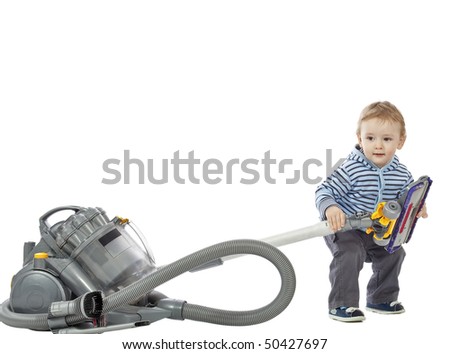
Vacuuming: So easy even a cave man could do it!


Technologies make life better because they make life more convenient; that is, they save time, conquer space, and create comfort. Technologies perform tasks we might otherwise have to do for ourselves. They relieve us from drudgery, labor, and physical exertion. They minimize the everyday struggles that were commonplace for our ancestors. In all, they make life easier.(Slack+Wise)

Vacuum cleaners are convenient and they cut the time of cleaning a floor, rug, or carpeted area in half. This kind of technology enables us to get work done faster and more efficiently and this is why so many people use vacuum cleaners. According to Goodway, a prominent vacuum cleaner manufacturere, there are even industrial vacuum cleaners that are used in industries such as pharmaceuticals, plastic molding plants, and railroad stations just to name a few.

In my previous blog I discussed the various kinds of vacuum cleaners. To reiterate, they can range from battery powered hand held vacuums to very large industrial vacuum cleaners. The most common kind of vacuum cleaner is the upright which is a midsize machine. Vacuum cleaners are used at carwashes for the purpose of cleaning cars and you can even find people using them in the mining industry.

The vacuum cleaner as a technology has definitely had an effect on our culture. Years prior, cleaning was always considered the woman’s job but over the years in our evolving world men have also taken a larger role in this area. According to our textbook, Culture and Technology, from a technological determinism perspective, technology is key in defining what culture is. Also it cause effects and such effects are the main cause of cultural change. The way we as a people do practical things such as cleaning or even our methods of communication is what defines our culture. From this position, it is fair to say that the vacuum cleaner has essentially advanced our culture, or to say the least it has changed it.


In Marshall McLuhan’s “Understanding Technology,” he speaks on the ideal that “The Medium is the Message.” According to McLuhan, the personal and social consequences of any medium result from the new scale that is introduced into our affairs by each extension of ourselves, or by any new technology. To put this in other words, technology changes us. It changes our perception of things. Vacuum cleaners can be found in use just about anywhere, because of this, people are doing twice the work in half the time. Their jobs are less strenuous and our environment is much cleaner. On the negative side, vacuum cleaners can even take the role of humans in some cases therefore, some jobs are eliminated. Compared to all of the positive advancements, this fact is minor. The idea is to know that the technology, the vacuum cleaner, is the message.


In conclusion, vacuum cleaners can be considered a technology that has helped shape our culture, our lives, and our world. Everywhere you go whether it be your home, the grocery store, car dealership, factory, or several other places you will find one. People use them in every walk of life and as time goes on and we continue to progress and change, the vacuum cleaner will be right along for the ride.


Why Use Shoes?


The use of shoes has been around for many years throughout different cultures. Shoes are designed to make us walk and run comfortably but are these the only reasons human beings rely on shoes? Definitely not especially in this new digital world we are living in. Shoes can sometime identify us for who we are. Identity plays major roles in our life; it is our characteristics which give cues to others to help them figure out what we represent. In our textbook Culture and Technology it states, “Identity affects how a person is placed in culture: how important they are, how they are treated, and what possibilities are open to them” (Slack 149). When we look at a commercial and see our favorite celebrity promoting shoes we run and buy the shoes no matter what the circumstances are. It doesn’t matter if we like them, the style of the shoe, or how much they cost. The only thing that matters is, Hanna Montana, Beyonce, or TI has the shoes on, therefore; it has to be the new trend. The funny thing is you can take those same shoes and someone who is not a celebrity can wear them and most people would say things like, “those shoes are old” or “nobody wears them anymore.” Shoes can say a lot about your character such as; if you keep yourself up, the type of style you like and you personality (outgoing, adventurous, quite, loud and soft spoken). When looking at someone shoes we tend to stereotype their lives at that very moment. In the reading, Cybertyping and the Work of Race, the author Lisa Nakamura states, “Stereotype itself an example of machine-language, albeit pre computer; the first stereotype was a machine device that could reproduce images relatively cheaply, quickly, and in mass quantities,” (Nakamura 318). In this day and time shoes are becoming more and more expensive. Prada, Gucci, Chanel, and even Nikes are all well quality shoes and all have been duplicated by cheap material and sold. The other manufactures know that everyone can not afford these shoes so they use cheap material to make the duplicates and sell them at a low price. If someone was to have on the fake Gucci or Jordan’s we atomically identify them as being cheap or having low income.


Technology is developed within shoes but why does this matter? Identity matter is one way of answering this question. Technology targets a particular group of people. Technology is designed according to who will use it. This is how they determine who they will distribute it to! In chapter thirteen of our textbook Culture and Technology, it talked about how technologies will be designed to work in ways that suite those use and users (Slack 150). When looking at a commercial in which a celebrity is promoting shoes, the commercial does not necessarily mean you are the target audience? If you are not a person who buys or will ever plan to buy expensive shoes the commercials is not meant for you. Although the purpose of these commercials is to get everyone to buy the product this is not possible. Therefore, when targeting an audience they use celebrities, people with nice skin, nice bodies, and gender depending on the type of shoe they are trying to sell. “The discourse of many commercials for the internet includes gender as only one of a series of outmode “body categories” like race and age,” (Nakamura 32). Race and gender is design to get the attention of the audience .When people wear shoes it is not just a shoe, it is culture, fashion, and above all their identity.

Cites: Slack, Jennifer Wise, J. MacGregor. Culture and Technology.

Nakamuar, Lisa. Cybertyping and the Work of Race.

Thursday, March 17, 2011

Wee, DDT

     DDT is a pesticide and this means it kills pests, if you have read my previous blog post you would know this. I related that it had been banned, but the truth is that it is still made today. Despite the known dangers of DDT, it is still manufactured in the United States but it is illegal to use it here (link). The chemical is only used in this country in response to a dire public emergency, such as need for strict disease control (spread by insects) or body lice epidemics. A quick internet search did not pull up any results about whether or not DDT was used against West Nile or its ilk, so obviously these did not count as public emergencies (what classifies this?). The U.S. can manufacture and sell DDT to countries, like Kenya, Thailand, and Mexico. They use it to control pest populations, where many are desperately trying to stem the deaths from mosquito borne diseases.
     When DDT was first introduced, it was hoped that it would be able to eradicate things like Malaria, a tragic global pandemic. Many debate today if that was ever possible, with some pointing out the resistance insects developed to the pesticide through overuse. Though, we all know that DDT was not synthesized to help people, it was synthesized to control pests that eat our crops. This type of mentality, controlling nature, is prominent in western culture.  Due to this cultural need for control, this dominion of nature, DDT was used. This is technology, why it is used and made, can be thought of from a cultural determinism standpoint. I actually intend to argue both sides, with the other being known as technological determinism. I want to do this to show that yes, I do pay attention in class. Also, I find that to think of things from a single theory never bodes well with the idea of truly trying to understand something.  Even if that something is just a pesticide.
     Cultural determinism is the belief that culture develops the needs for new technology, meaning that it has a say in how it is used. DDT was made to be a pesticide, well it was accidentally made, but when its effects were known the creator won a Noble Peace Prize (link). Knowing this it is not hard to imagine that this was a happy accident. Killing is what DDT does and that is what it is used for, it was used to purify the bad wilderness and bring our civilizing good crops. It did have nobler aspirations, but because of its overuse for big agriculture, they could not be met.
     On the flip side, technological determinism is the belief that technology causes effects, and thus is causes the changes to culture. DDT caused a lot of effects, it killed birds, fish, and harms the environment, and this all affects us. It never just eradicated the bad bugs that destroyed our crops, but caused a wave of cultural changes that still is moving today. This chemical cause a generation of people to turn to organic farming (after reading things like Silent Spring), and reject big corporations. This organic movement (which has deviated from the original movement) is now a major player in the global economy. We know that DDT was an accidental invention, so its side effects were not really known until around the 40s, around 30 years before it was banned.
     DDT was just something to kill some bugs so our plants would grow better, it would be cheaper to produce them, and then cheaper for us to buy them. But, as time went on we began to realize that our technology began to have a negative impact on us and our environment. We determined what we wanted it to do, but in the end its effects forced our culture to change.

Beauty, Glamour, or Confidence...What IsThe Goal of Hairweave


Hair weave is considered to be, by most people, an aid to beauty and self confidence.It is almost certain that any woman feels better when her hair meets her approval, along with many other things.Glamour has become a significant way of life, and women a go through almost anything to reach that goal, such as implants, lipo suctions,breast enhancements, and long processes of applying hair weaves.Hair weaves is one of the biggest contributors to assumption of what is glamorous.Jennifer Slack and J. Macgregor Wise mentions in the book Culture and Technology that technologies of the body (ranging from make-up to surgery) can be used to alter identities to either conform to or rebel against cultural norms(pg.161).In other words, technologies such as hair weave can be used to help some one fit into what is culturally accepted for them, or to help someone stand out or be the outcast of thier group.Hair weaves are used to enhance a person's natural hair by adding lenght, adding volume and thickness, adding fashionable colors to the hair without the use of damaging chemicals ,and/or just to achieve a certain hairstyle.Celebrities are some the hugest users of hair weaves and wigs as an glamour statement.Celebrities have hairweaves shipped from places like India to ensure that they have the best quality hair that money can buy.The highest quality extension hair is Indian human remy hair.They sometimes spend up to 5,000 dollars for wigs and hair weaves, simply to look glamorous.


On the other hand, others use hair weave as a source to gain back self confidence,not as a fashion statement.Hair weaves give some people the opporunity to feel beautiful and normal.Hair loss occurs commonly with cancer patients who are going through Chemotherapy .Hair loss occurs over periods of days or weeks,starting with thinning to complete loss of hair.Most Cancer patients who plan to use Chemotherapy and experience hair loss choose to use human hair wigs and human hair pieces.Arthur Frank states,in The Body's Problems With Illness, that "When adult bodies lose control,they are expected to attempt to regain it if possible,and if not then atleast to conceal the loss as effectively as possibly (pg.33).Erving Goffman's classic work on stigma shows that society demands a considerable level of body control from its members(pg.33).Goffman shows that they are responsible for how they present themselves and manifest the signs of illness(pg.33).Hair weaves help to achieve the goal of appearing "healthy" and "normal".


Frank, Arthur."The Body's Problems With Illness." pages 161

Slack,Jennifer and J.macgrefor Wise."Culture and Technolgy."page 33

Infuse Bone Graft rhBMP-2: The new future of bone growth


The use of Infuse bone graft is for many different purposes. One being that a patient may need Infuse for oral maxillofacial purposes and others might need it for posterolateral lumbar spine fusion. What ever the case Infuse is an effective way to have bone grow at a rapid rate while reducing the percentage of follow up surgery for the patient. According to a Medtronic news release in 2007 it is estimated that more than 350,000 bone grafting procedures to generate or regenerate bone in sinus augmentations and localized alveolar ridge augmentations for defects associated with extraction sockets are performed in the United States each year. Autogenous bone grafts, or bone harvested from other parts of the patient such as the tibia (shin), ilium (hip) or chin, are currently the standard grafting procedure used for these patients. INFUSE Bone Graft offers surgeons and their patients an alternative to autogenous bone grafting, possibly reducing patients’ pain, limiting scarring and reducing surgical time. According to Dr. Daniel Spagnoli an oral and maxillofacial surgeon with University Oral and Maxillofacial Surgery in Charlotte, NC he says “Patients come to see us with a multitude of problems and it’s our job to help patients discover methods to achieve their goals.” “When we talk to an individual, we have to think about more than the structural problem. We also consider the psychological and social aspects of missing teeth. INFUSE Bone Graft encourages bone growth to make it possible for them to have the corrective dental work that gives my patients a chance to have confidence, to feel good about their smile, to function well and to be able to enjoy a meal,” he added. What Dr. Spagnoli is saying relates to what our book Culture + Technology says about cyborgs. Acoording to our text a cyborg is an entity part human and part machine. (p. 169) When surgeons do work on our bodies to help us have a normal and a productive life they are essentially putting technology in our bodies that gives us an advantage to be able to continue with life normally. From putting artificial limbs on our bodies to help us to walk and swing our arms, to putting bone from one area to another area to help new bone grow in our mouth so we can eat, can all be argued that it is a form of creating a cyborg. According to The Spine Journal official journal of the North American Spine Society, a patient sample was taken. It states that 102 patients over the age of 60 years old required posterolateral lumbar spine fusion and all used Infuse Bone graft. Could this mean that our medicine is taking a step toward us all becoming cyborgs as we get older? Could this help us all to live longer and without back pains in the future. The answer to that will soon come, but medicine has definitely taking a huge step technologically where it is able to do things our bodies cannot. One being growing bone healthier, stronger and quicker like Infuse does.